

Introduction
Imagine knowing exactly what your crops need, precisely when they need it. Real-time Soil NPK sensor data and precision agriculture have captivated growers worldwide, painting a picture of healthier plants, optimized yields, and reduced fertilizer waste. However, amid all this potential, one vital question remains: Are NPK sensors accurate and reliable in the real world?
This comprehensive guide cuts through the doubts surrounding agricultural sensors and addresses practical field realities. We explore how they measure nutrients, compare their capabilities against traditional laboratory benchmarks, and highlight the critical environmental factors influencing field performance. By the end, you will understand how to leverage real-time sensing effectively to drive more profitable farming decisions.
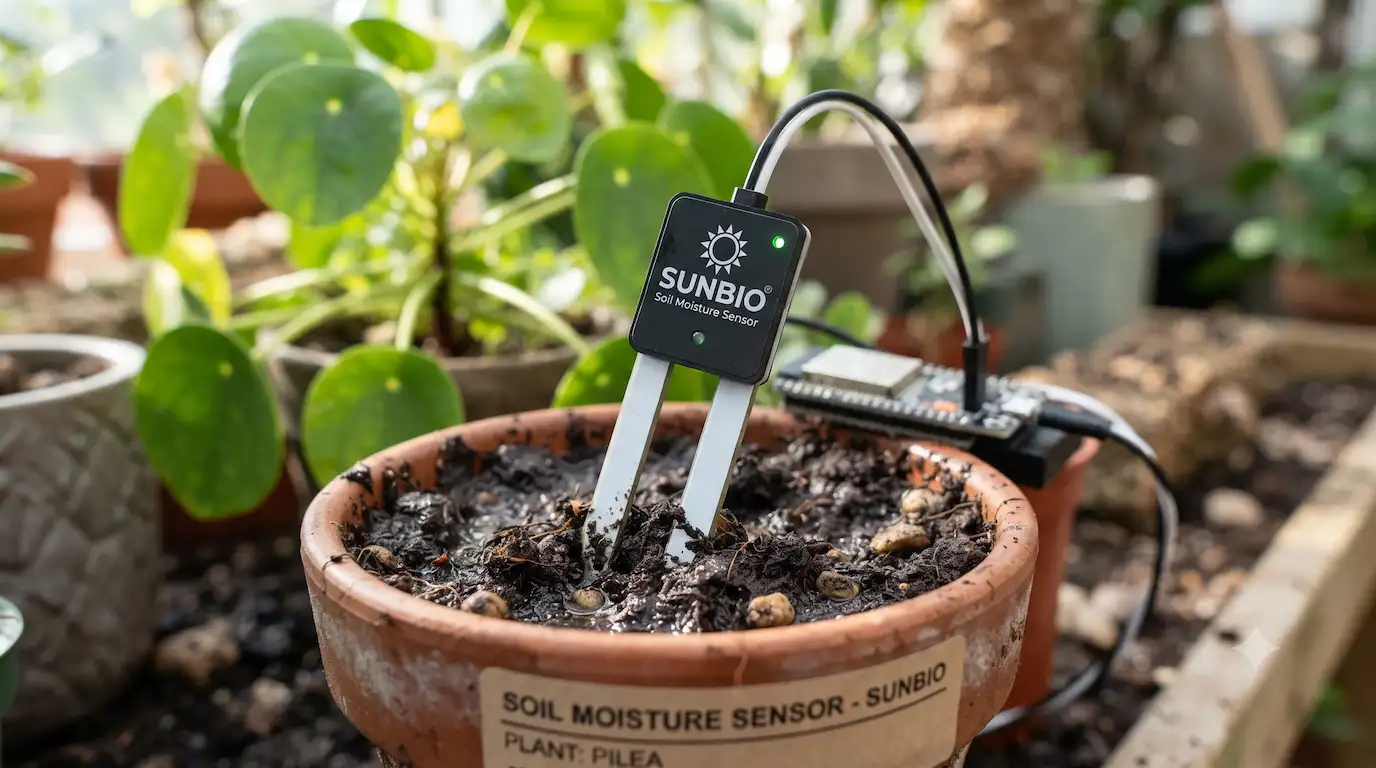
Understanding How NPK Sensors Work
The life of every thriving plant relies on a delicate balance of macronutrients—specifically Nitrogen (N), Phosphorus (P), and Potassium (K). Plants depend on nitrogen to foster lush vegetative growth, phosphorus to build strong root systems and flowering, and potassium to regulate water pressure and overall systemic health. Maintaining the correct nutritional ratio maximizes both crop quality and final yield.
Unlike destructive chemical laboratory extractions, commercial NPK sensors determine ion availability based on underlying soil properties using techniques such as electrical conductivity (EC), ion-selective electrodes, and optical methods. It is vital to recognize that these probes provide a dynamic, real-time snapshot of active nutrient ions dissolved in soil moisture rather than total elemental laboratory extraction.
NPK Sensors vs. Traditional Lab Tests
To assess the true value of modern monitoring tools, let’s compare real-time sensor performance directly against traditional laboratory benchmarks.
| Feature / Metric | Traditional Lab Tests | Real-Time NPK Sensors |
|---|---|---|
| Data Frequency | One-off snapshots (periodic physical sampling) | Continuous, 24/7 hourly or daily tracking |
| Turnaround Time | Days or weeks (shipping and processing delays) | Instant, immediate on-site readout |
| Measurement Type | Total chemical extraction / laboratory assay | Active ionic concentration via soil properties |
| Cost Efficiency | High recurring fees per sample batch | Cost-effective one-time hardware investment |
| Primary Best Use | Establishing deep seasonal nutrient baselines | Dynamic day-to-day irrigation and fertilizer tuning |
Traditional Lab Tests: Pros and Cons
Pros:
- High Accuracy: Provides precise quantification of specific chemical forms in a controlled setting.
- Industry Baseline: Widely trusted for official regional fertilizer guideline recommendations.
- Comprehensive Assays: Frequently bundles micro-nutrients, organic matter composition, and baseline pH in one report.
Cons:
- Time Delays: Results often arrive too late to correct active nutrient deficiencies mid-season.
- High Operating Cost: Lab fees restrict how frequently large fields can be sampled.
Real-Time NPK Sensors: Pros and Cons
Pros:
- Continuous Insight: Uncovers immediate shifts caused by fertigation cycles or heavy irrigation.
- Immediate Action: Empowers agronomists and farmers to react instantly on-site.
Cons:
- Environmental Sensitivity: Readings can fluctuate if temperature or moisture shifts drastically.
- Site Calibration: Requires proper insertion technique and soil-specific calibration curves for maximum fidelity.
Critical Factors Influencing Field Reliability
The accuracy and field reliability of any soil sensor depend heavily on local environmental parameters:
- Soil Texture and Type: Variations in clay content, bulk density, and cation exchange capacity alter how ions interact with the probe.
- Moisture Dynamics: Because sensors rely on pore water as an electrical conduction medium, dry soils or waterlogged conditions skew ionic conductivity metrics.
- Temperature Shifts: Rapid temperature swings affect electrical conductivity readings, making built-in temperature compensation essential.
- Soil pH Levels: Extreme soil acidity or alkalinity changes nutrient binding states, influencing active ion availability.
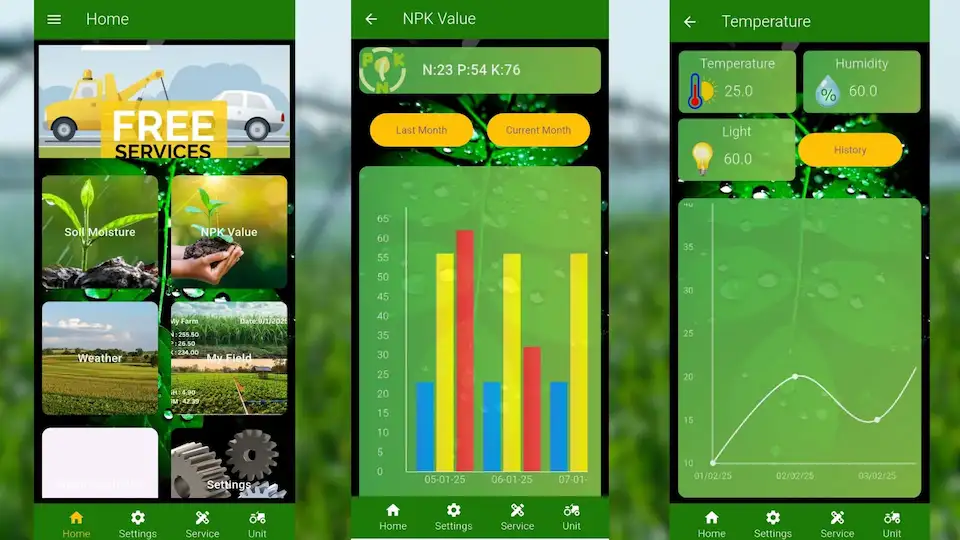
Data visualization from agricultural IoT gateways tracking real-time field parameters.
Final Verdict: Complementary, Not Competitive
The essential takeaway is that IoT sensors are not meant to entirely replace traditional laboratory testing. Instead, they form a powerful partnership: laboratories establish a comprehensive seasonal nutrient baseline, while real-time sensors provide dynamic insights for day-to-day fertigation management.
Frequently Asked Questions (FAQs)
Can NPK sensors completely replace soil lab tests?
No. While sensors provide exceptional real-time visibility into daily nutrient and moisture fluctuations, traditional lab tests remain valuable for initial macro- and micro-nutrient baseline profiling.
How often should soil sensors be calibrated?
Calibration frequency depends on soil type and crop cycles. Checking probe contact and verifying against a known reference sample at the start of each growing season ensures optimal measurement stability.
Conclusion
Deploying reliable technology transforms standard agronomy into smart precision farming. Our engineered SunBio Smart Soil NPK Sensor is designed to excel in demanding field conditions, delivering consistent telemetry data to help you optimize fertilizer usage, minimize environmental runoff, and boost crop yields.
Leave a Reply