
In the era of modern industrial automation, operational efficiency extends far beyond machinery and production lines. Precise climate control is critical, and progressive manufacturing plants are upgrading to intelligent Industry Centralized AC Management Systems. Discover how this automated IoT infrastructure is redefining thermal management, energy conservation, and optimal working conditions in smart factories through advanced centralized ac management.
Why Traditional HVAC Controls Fall Short in Smart Factories
Traditional heating, ventilation, and air conditioning setups rely heavily on manual thermostat adjustments or isolated unit controls. In large-scale manufacturing environments, this decentralized approach leads to excessive energy consumption, uneven temperature zones, and premature equipment wear. Implementing a centralized ac management framework bridges these gaps by providing unified, data-driven control across every building and zone.
| Metric / Feature | Traditional Decentralized HVAC | Centralized AC Management System |
|---|---|---|
| Control Architecture | Isolated manual thermostats per unit | Unified, web & mobile SCADA dashboard |
| Energy Efficiency | High power waste due to overlapping cycles | Dynamic scheduling & automated load optimization |
| Maintenance Approach | Reactive repairs after mechanical failure | Proactive IIoT alerts & runtime sequencing |
| Compliance & Auditing | Manual paper logs prone to gaps | Tamper-proof digital temperature & humidity logs |
Unifying Control Through Industrial Automation
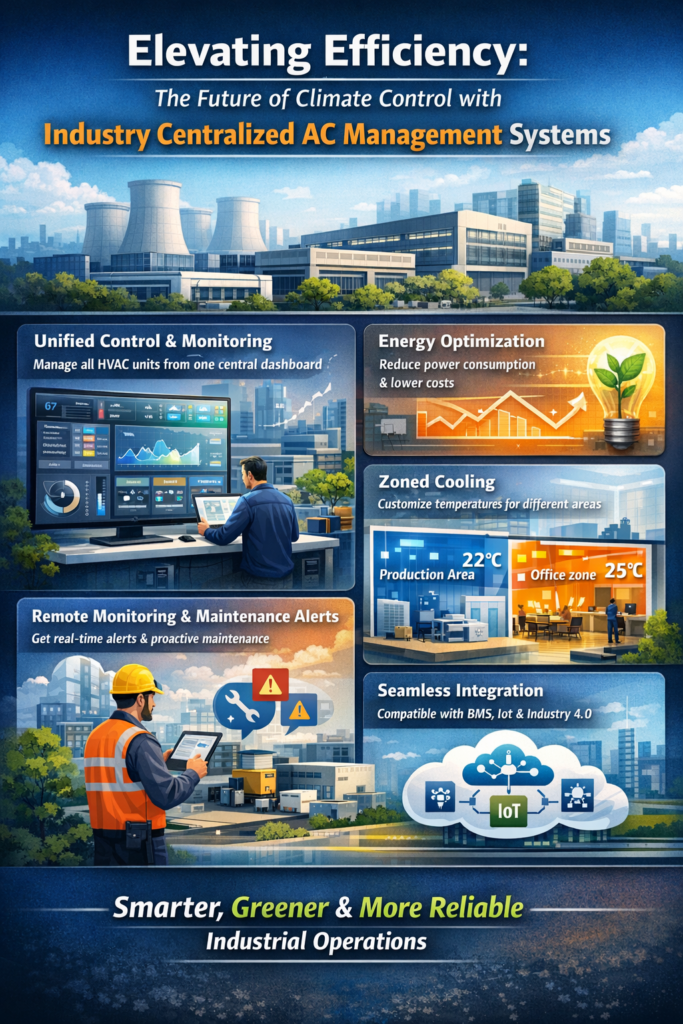
Managing cooling across vast manufacturing plants and multi-building facilities is complex. A centralized industrial automation platform simplifies complex HVAC operations by enabling real-time temperature regulation, automated scheduling, and centralized performance monitoring. This integrated approach drastically minimizes manual intervention, human error, and facility overhead.
Energy Efficiency for Sustainable Smart Factories
Energy optimization is a core pillar of Industry 4.0. By continuously analyzing facility usage patterns and dynamically optimizing cooling cycles, automated AC management systems significantly cut power consumption, reduce carbon footprints, and lower operational costs while directly supporting corporate sustainability goals.
Zoned Cooling for Specialized Industrial Work Areas
Different zones within an industrial facility require specific microclimates. The system enables automated zoned cooling for specialized production floors, high-density server rooms, warehouses, and corporate office spaces. Automated remote monitoring and threshold alerts prevent unexpected thermal downtime and protect sensitive hardware.
Remote Monitoring and Proactive IIoT Maintenance
In industrial manufacturing, unplanned downtime halts production and impacts profitability. Leveraging Industrial IoT (IIoT) connectivity, our Centralized AC Management System facilitates remote monitoring, giving operators real-time diagnostics on the health of HVAC systems. Proactive maintenance alerts flag mechanical anomalies before they disrupt plant operations.
Seamless Integration with Industrial Infrastructure
Designed for easy integration into existing Building Management Systems (BMS), SCADA platforms, IoT frameworks, and Industry 4.0 ecosystems, a Centralized AC Management System future-proofs industrial climate control while boosting facility-wide productivity.
A Strategic Long-Term Investment in Operational Excellence
Deploying an automated industrial climate control solution is much more than a routine facility upgrade—it is a strategic investment in reliable, automated plant operations. As facilities continue to digitize and embrace industrial automation, centralized climate control plays a foundational role in maintaining peak efficiency and regulatory compliance.
Ultimately, a centralized AC management architecture serves as a game-changer for industrial plants demanding precision, energy efficiency, and total environmental control. Embrace the future of smart industrial facilities—where climate control is fully automated, sustainability is optimized, and production runs seamlessly.
Scalable Infrastructure for Future Industrial Expansion
As industrial facilities grow, cooling demands scale proportionally. A centralized AC management system is built with high modularity and scalability, allowing plant managers to integrate new production zones, buildings, or cooling units without costly infrastructure overhauls.
Improved Compliance and Automated Audit Readiness
Industries such as pharmaceuticals, food and beverage processing, and electronics manufacturing must adhere to strict environmental standards. Centralized AC automation maintains precise, tamper-proof temperature and humidity logs, streamlining regulatory compliance and audit preparation with automated reporting for quality assurance teams.
Enhanced Equipment Lifespan via Intelligent Sequencing
Manual operation and uneven thermal loads accelerate HVAC wear and tear. Centralized automation software ensures balanced equipment runtime, intelligent sequencing of chillers and Air Handling Units (AHUs), and automated maintenance triggers, significantly extending machinery lifespan and lowering service costs.
Data-Driven Decision Making in Smart Factories
One of the strongest advantages of an automated industrial AC platform is deep data analytics. By generating detailed reports on thermal trends, compressor runtime hours, and energy consumption metrics, facility managers can make informed decisions, identify peak load windows, and optimize facility capacity planning.
User-Friendly Web & Mobile Dashboards
Modern centralized AC platforms feature intuitive web and mobile scada-style dashboards. Operators can monitor live system statuses, adjust zone setpoints, schedule automated cycles, and receive push notifications from a single unified interface. Role-based access controls ensure secure management permissions for facility engineers, maintenance crews, and plant administrators.
Frequently Asked Questions (FAQs)
How does a centralized AC management system reduce factory energy bills?
By using automated scheduling, intelligent unit sequencing, and real-time load balancing, the system eliminates energy waste from overlapping cooling cycles and prevents units from running unmonitored in empty zones.
Can centralized HVAC management integrate with existing SCADA or BMS platforms?
Yes. Modern industrial solutions are designed for seamless integration into existing Building Management Systems (BMS), industrial automation platforms, and Industry 4.0 ecosystems.
Conclusion: Maximizing Efficiency with Centralized AC Management
Integrating a robust centralized AC management strategy into your manufacturing plant is essential for modern competitiveness. By lowering energy bills, automating compliance logs, and preventing unexpected equipment failures, smart facilities secure higher ROI and long-term operational resilience.
Leave a Reply