
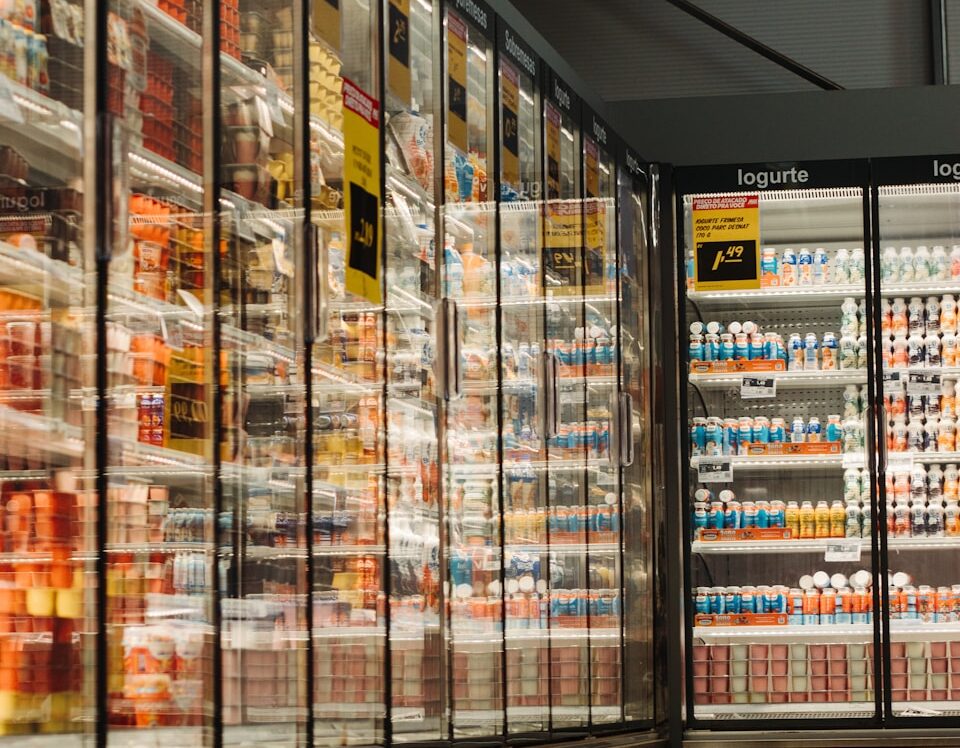
In today’s fast-paced commercial and residential environments, deep freezers play an indispensable role in preserving perishable inventory for extended periods. Whether you are managing vaccines in a clinical laboratory, food stock in a commercial kitchen, or biological samples in a research institution, maintaining precise thermal control is mandatory. However, mechanical failures or power interruptions can cause temperatures to drift silently. That is where an advanced Deep Freezer Monitoring System becomes vital, offering real-time temperature tracking, instant automated alerts, and complete compliance readiness.
Ensuring Food Safety and Regulatory Compliance
A primary motivation for deploying an automated monitoring setup is uncompromising food safety and regulatory compliance. Commercial and laboratory deep freezers are designed to hold items below strict temperature thresholds (typically under 0°C up to ultra-low ranges like -80°C) to inhibit bacterial proliferation and chemical degradation. If internal temperatures rise undetected, inventory spoils rapidly, giving rise to serious public health risks and financial liabilities. Modern IoT-enabled monitoring solutions continuously track both temperature and humidity, immediately triggering SMS, email, or dashboard alarms if parameters deviate from the pre-set safety band.
Cost Savings, Efficiency, and Predictive Protection
Unmonitored temperature fluctuations often culminate in catastrophic stock write-offs. Beyond losing high-value goods, unexpected compressor failures drive excessive energy waste and equipment strain. Integrating an intelligent monitoring solution allows facilities to detect minor cooling discrepancies early—such as a failing door seal or minor refrigerant leak—before total equipment failure occurs. Proactive management optimizes compressor cycles, lowers power consumption, and extends overall asset lifecycle.
Manual vs. IoT-Enabled Freezer Monitoring
To understand the operational leap from legacy practices to smart automation, consider the following structural comparison:
| Feature | Manual Logbooks | Digital/IoT Monitoring System |
|---|---|---|
| Tracking Frequency | Periodic manual checks (e.g., twice daily) | Continuous 24/7 real-time logging |
| Alert Mechanism | None (relies on physical discovery) | Instant automated SMS, email, and app alerts |
| Data Accuracy | Prone to human error or falsification | High-precision digital logs & tamper-proof audit trails |
| Remote Access | None (requires physical presence) | Accessible globally via smartphone or web portal |
| Compliance Reporting | Tedious manual data compilation | One-click automated reports for regulatory audits |
Peace of Mind and 24/7 Remote Monitoring
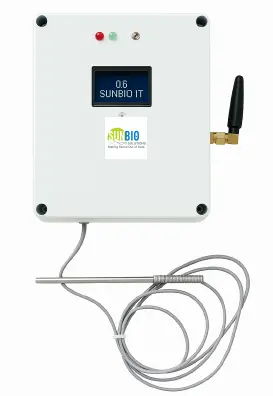
Facility managers and business owners cannot remain on-site around the clock. Advanced remote monitoring solutions interface directly with modern industrial infrastructure, allowing teams to check live thermal metrics anytime, anywhere. By pairing edge hardware like SunBio’s Deep Freezer IoT Device with centralized cloud dashboards, operators gain complete visibility over multiple units simultaneously, ensuring prompt corrective actions even during off-hours.
Frequently Asked Questions (FAQs)
1. What temperature range should a deep freezer maintain?
Standard deep freezers should maintain temperatures at or below -18°C (0°F) for food safety, while specialized laboratory or medical ultra-low freezers require precise regulation down to -80°C.
2. How do IoT freezer monitors send alerts during a power failure?
Quality IoT monitoring hardware features built-in backup battery units and cellular or local network redundancy, ensuring emergency alerts are transmitted immediately when mains power fails.
3. Can these monitoring systems integrate with existing industrial setups?
Yes. Systems built on modular IoT architectures can easily connect via local gateways, MQTT protocols, or existing facility networks without requiring a complete overhaul of your refrigeration infrastructure.
Conclusion
Investing in a robust deep freezer monitoring system safeguards valuable inventory, cuts down avoidable energy waste, and guarantees absolute regulatory compliance. Transitioning from manual logbooks to automated IoT oversight ensures your operations remain resilient, efficient, and secure. Explore our specialized Deep Freezer IoT Device to modernize your cold chain infrastructure today.
Leave a Reply