
In the fast-paced world of industries, efficiency is the name of the game. When it comes to climate control, businesses are turning to the next level – the Industry Centralized AC Management System. Let’s delve into how this technological marvel is revolutionizing the way industries maintain optimal working conditions.
Unifying Control for Large-Scale Environments
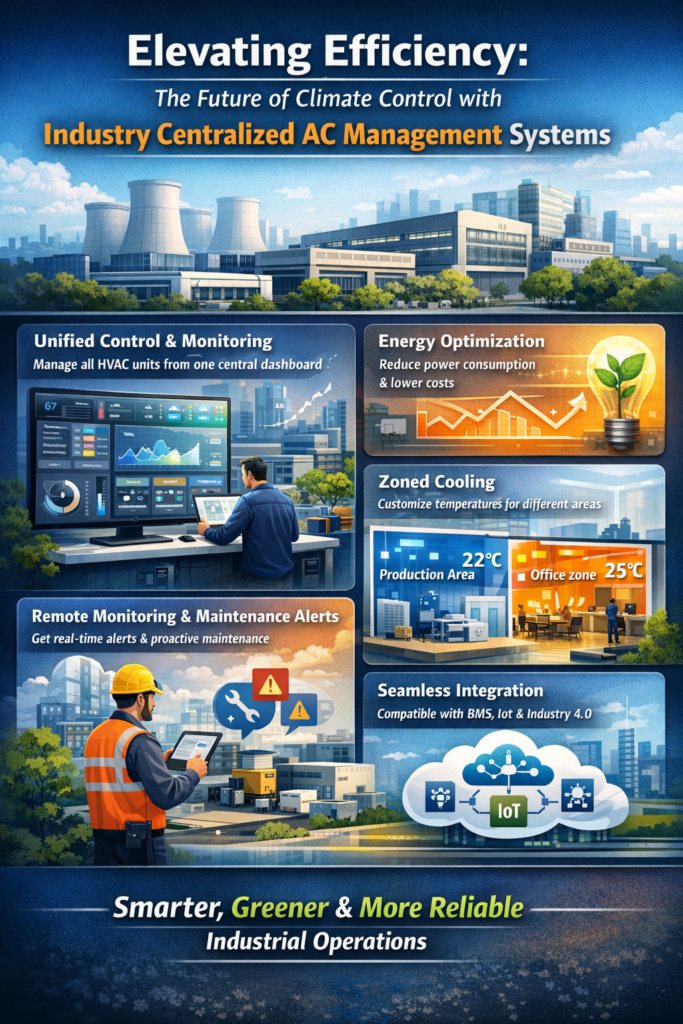
Managing cooling in vast industrial spaces can be complex. A centralized system simplifies operations by enabling real-time temperature control, performance monitoring, and automated scheduling. This not only improves indoor comfort but also reduces manual intervention and human error.
Energy Efficiency for Sustainable Operations
Energy efficiency is another major advantage. By analyzing usage patterns and optimizing cooling cycles, industries can significantly cut power consumption and operational costs while supporting sustainability goals.
Zoned Cooling for Specialized Work Areas
The system also enables zoned cooling for specialized areas such as production floors, warehouses, and office spaces. Remote monitoring and proactive maintenance alerts help prevent unexpected downtime and extend equipment life.
Remote Monitoring and Proactive Maintenance
In the world of industry, downtime is not an option. The Centralized AC Management System facilitates remote monitoring, providing real-time updates on the health of the HVAC systems. Proactive maintenance alerts ensure that potential issues are addressed before they disrupt operations, saving both time and resources.
Seamless Integration with Industrial Infrastructure
With seamless integration into existing BMS, IoT, or Industry 4.0 environments, a Centralized AC Management System is a smart investment that future-proofs industrial climate control while boosting productivity and reliability.
Long-Term Investment in Operational Excellence
Investing in an Industry Centralized AC Management System is not just an upgrade—it is a strategic move toward smarter, greener, and more reliable industrial operations. As industries continue to digitize, centralized climate control will play a critical role in improving efficiency, sustainability, and overall operational excellence.
In conclusion, the Industry Centralized AC Management System is a game-changer for industries seeking precision, efficiency, and sustainability in their climate control strategies. From unified control to energy efficiency and seamless integration, this technological marvel is redefining how industries stay cool and productive. Embrace the future of industrial climate control – where efficiency is centralized, sustainability is optimized, and operations run at their best.
Scalable for Future Expansion
As industries grow, cooling requirements also increase. A centralized AC management system is highly scalable, allowing new zones, buildings, or equipment to be added without major infrastructure changes. This flexibility makes it an ideal long-term solution for expanding industrial facilities.
Improved Compliance and Audit Readiness
Many industries such as pharmaceuticals, food processing, and electronics manufacturing must maintain strict environmental conditions. Centralized AC systems maintain precise temperature and humidity logs, making regulatory compliance and audits much easier. Automated reports provide clear documentation for quality assurance teams.
Enhanced Equipment Lifespan
Frequent manual operation and uneven load distribution often reduce the lifespan of HVAC equipment. Centralized management ensures balanced runtime, intelligent sequencing of chillers and AHUs, and timely maintenance alerts. This significantly reduces wear and tear, lowers maintenance costs, and improves the overall reliability of the cooling infrastructure.
Data-Driven Decision Making
One of the biggest strengths of an Industry Centralized AC Management System is its ability to generate actionable insights. With detailed reports on temperature trends, runtime hours, and energy usage, facility managers can make informed decisions. Historical data helps identify peak load times, optimize equipment usage, and plan capacity upgrades more effectively.
Improved Compliance and Audit Readiness
Many industries such as pharmaceuticals, food processing, and electronics manufacturing must maintain strict environmental conditions. Centralized AC systems maintain precise temperature and humidity logs, making regulatory compliance and audits much easier. Automated reports provide clear documentation for quality assurance teams.
User-Friendly Dashboard and Controls
Modern centralized AC platforms come with intuitive web and mobile dashboards. Operators can view live system status, adjust setpoints, schedule operations, and receive alerts — all from a single interface. Role-based access also ensures secure control for different teams such as facility, maintenance, and management.